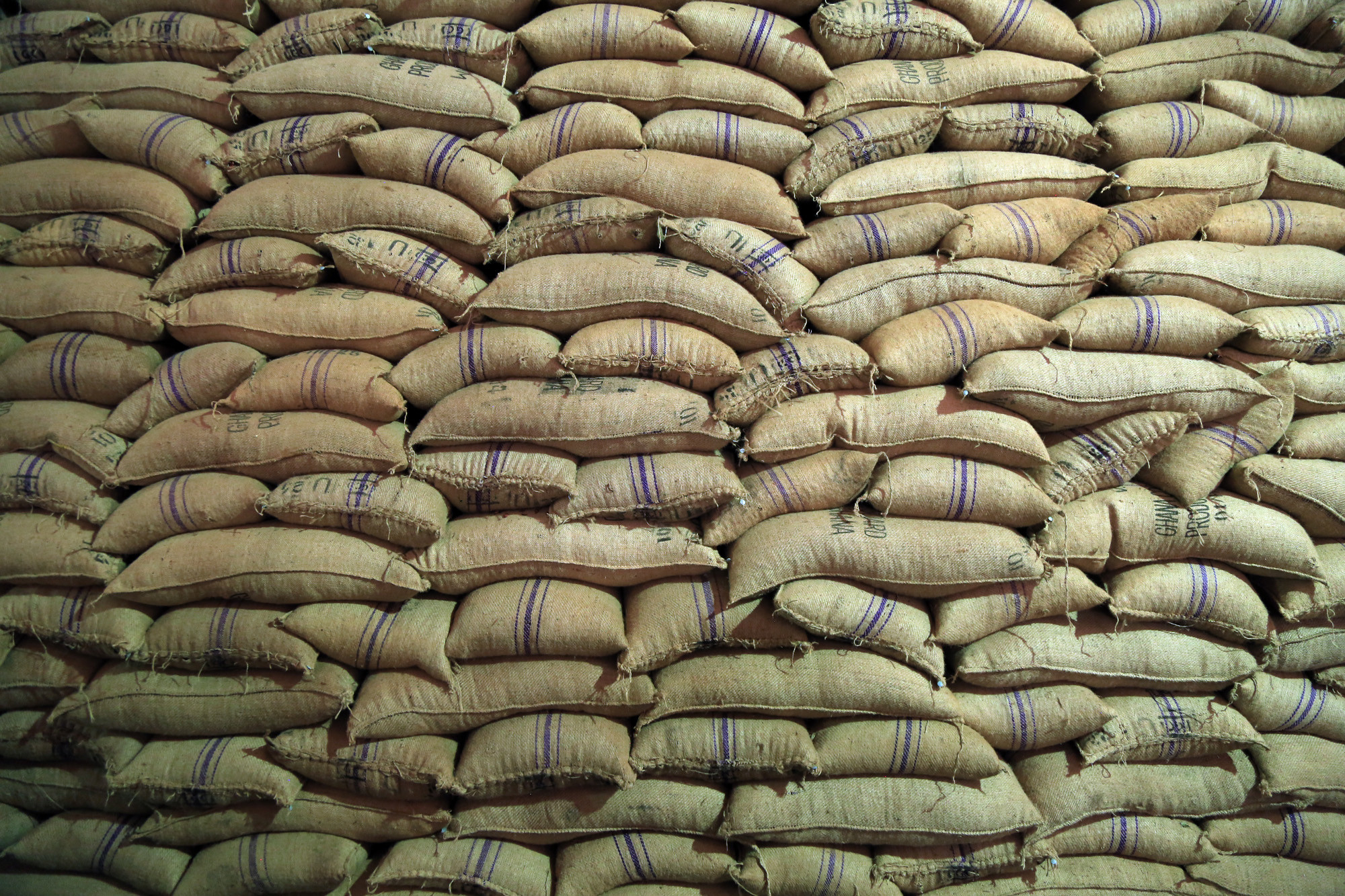
Les hydrocarbures d'huile minérale (MOH) sont des contaminants dérivés du pétrole qui peuvent pénétrer dans les denrées alimentaires par l'intermédiaire des matériaux avec lesquels celles ci sont en contact, comme l'emballage en jute, qui est couramment utilisé dans les chaînes d'approvisionnement agroalimentaires, notamment celles du cacao. Les sacs de jute sont privilégiés pour leur solidité, leur pérennité et leur respirabilité, ainsi que pour les avantages qu'ils présentent sur le plan de la durabilité par rapport aux emballages synthétiques. Le marché mondial du jute est évalué à environ 2,8 milliards d'USD et devrait afficher une croissance constante, l'Inde et le Bangladesh étant à l'origine de la quasi totalité de la production mondiale de jute. En conséquence, de grands volumes de produits faisant l'objet d'un commerce international sont chaque année mis au contact du jute; au niveau mondial, on estime que la majorité des fèves de cacao passe par des emballages en jute à un point ou à un autre de la chaîne d'approvisionnement, ce qui représente potentiellement plus de 50 millions de sacs par an.
Des progrès récemment réalisés dans le domaine de la recherche ont permis d'améliorer la compréhension des composés de MOH les plus nocifs, en particulier des hydrocarbures aromatiques d'huiles minérales (MOAH), qui suscitent des préoccupations pour la santé du fait de leur potentiel cancérogène et génotoxique. Ces constatations ont conduit l'Union européenne à instaurer des limites réglementaires concernant la présence de MOAH dans les produits alimentaires, y compris les fèves de cacao et les produits à base de cacao. Il a été établi que les sacs de jute utilisés pour l'emballage du cacao étaient une source majeure de contamination aux MOH, mais l'existence de normes obsolètes et de capacités d'analyse limitées dans les pays producteurs de jute et de cacao rend difficile la surveillance et la prévention de la contamination. En l'absence de mesures préventives efficaces, une part importante des exportations de cacao risque d'être non conforme aux prescriptions de l'UE, ce qui est susceptible d'engendrer des perturbations des échanges qui affecteraient les pays producteurs de cacao d'Afrique de l'Ouest ainsi que les producteurs de jute d'Asie du Sud. Parallèlement, l'amélioration de l'innocuité alimentaire des emballages en jute bénéficierait plus largement à d'autres produits, comme le riz, les épices et le café, et contribuerait à protéger les consommateurs des pays où le jute est couramment utilisé pour l'emballage des produits alimentaires d'origine nationale.
Ce don pour l'élaboration de projets (PPG) a pour objet de rassembler les secteurs du jute et du cacao afin de convenir de critères clairs et pratiques pour l'actualisation des normes et des orientations relatives à la manière dont les emballages en jute sont produits, traités et utilisés dans la chaîne d'approvisionnement du cacao. Il jettera aussi les bases d'un projet ciblé grâce à une évaluation des lacunes techniques, analytiques et opérationnelles, à un renforcement des capacités de production et de vérification d'emballages en jute présentant des niveaux de MOH conformes, et à la recherche de solutions concrètes pour améliorer la traçabilité et empêcher la circulation de sacs contaminés.