The global development sector is navigating a rapidly shifting funding landscape. Official Development Assistance (ODA) is projected to decline by up to 17% by 2025, its largest drop in decades. At the same time, broader geopolitical shifts are contributing to a more constrained development finance environment, with critical implications for developing countries.
Despite these pressures, the demand for sustainable and high-impact solutions to finance the Sustainable Development Goals (SDGs) continues to grow. This highlights the urgent need for more innovative, scalable and collaborative approaches to development financing.
Against this backdrop, the Standards and Trade Development Facility (STDF) hosted a virtual side event at the Fourth International Conference on Financing for Development (FFD4). The event convened finance experts, trade specialists and public-private partnership practitioners to explore how countries and donors can leverage innovative tools to prioritize and finance high-impact food safety and animal and plant health investments for safe trade in line with the new STDF Strategy for 2025 – 2030.
Throughout the discussion, five key themes emerged:
Strengthening the Investment Case
A recurring message from Marlynne Hopper, Acting Head of the STDF Secretariat, was the need to explore opportunities for scalable, evidence-based solutions. Through tools like the STDF Prioritizing SPS Investments for Market Access (P-IMA) framework, STDF is helping countries prioritize investments that are offering high returns and strategic value.
In The Gambia, a $US 3.5-million-dollar SPS investment is expected to return $US 52.4 million dollars. In Burkina Faso, improved aflatoxin control boosted maize exports and farmer incomes. Bhutan aligned SPS improvements with Pandemic Fund support, while the STDF-funded ePhyto project has enabled over 96 countries to adopt digital phytosanitary certification, enhancing efficiency and reducing costs of negotiating bilateral agreements. However, scaling these successes requires more than technical solutions; it demands coordinated, long-term financing and strengthened implementation partnerships.
Reframing SPS requirements as a Strategic Business Opportunity
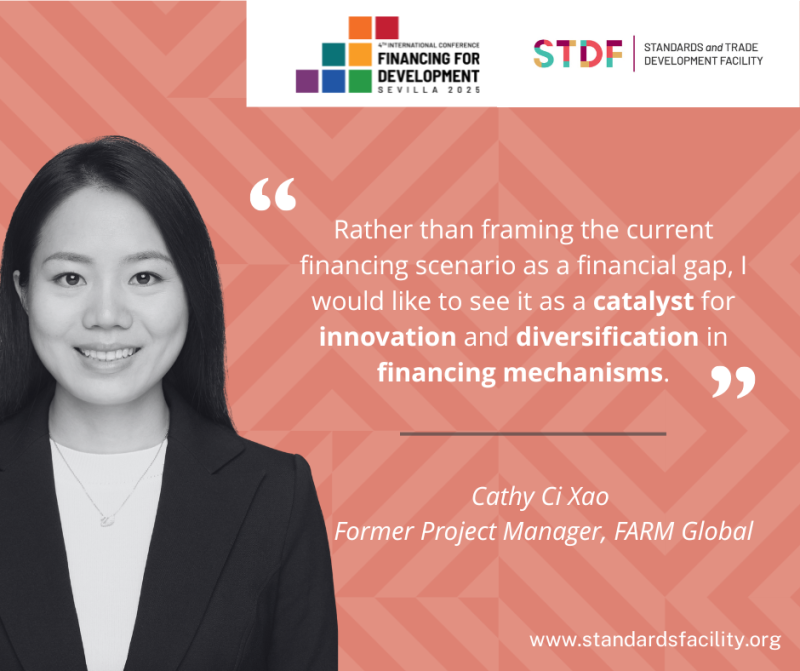
Presenting SPS requirements as a value-add rather than a cost can reshape how public and private actors engage. Finance expert Cathy Xi Cao challenged participants to shift their mindset from seeing SPS systems as compliance obligations to viewing them as high-potential investment areas. By positioning SPS requirements as a contributor to supply chain resilience, agrifood innovation and market competitiveness, there is an opportunity to attract new classes of investors, from agribusinesses to impact-driven venture capitalists. Real-world examples highlighted growing investor interest in traceability, biocontrol and cold chain infrastructure, all areas where food safety and animal and plant health requirements plays a central role.
Unlocking New and Non-Traditional Finance
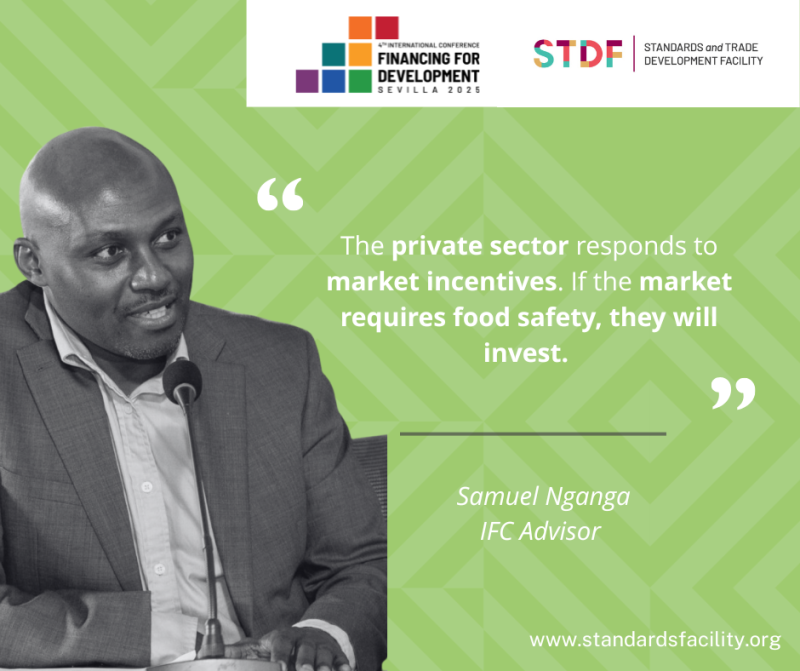
With traditional donor budgets under strain, diversifying finance avenues was another major theme. Regional development banks and philanthropic capital were discussed, offering alternative pathways to address long-term infrastructure and service delivery gaps in SPS systems. IFC Advisor, Samuel Nganga and Finance Advisor, Cathy Xi Cao, both spotlighted blended finance models, highlighting how first-loss guarantees, matching grants and concessional capital could be used as effective tools for attracting private investment. They also pointed to the importance of pairing financial instruments with technical assistance, risk mitigation tools and inclusive policies to ensure that SMEs and broader stakeholders along the value chain equally benefit.
Building Trust to Enable Public-Private Partnerships
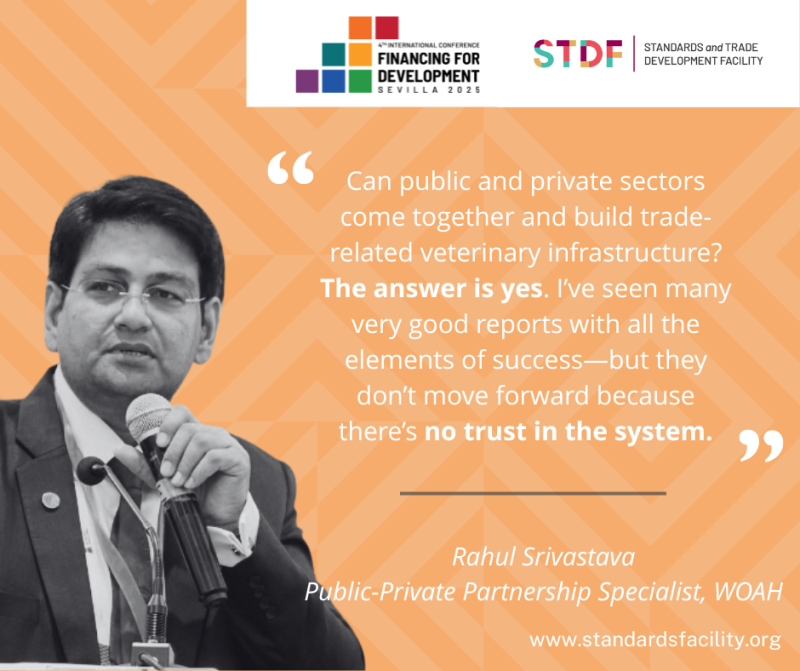
Rahul Srivastava, Public-Private Partnership Specialist at the World Organisation for Animal Health (WOAH) brought a veterinary services perspective to the discussion. He shared sobering data from the WOAH PVS (Performance of Veterinary Services) evaluations: out of 140 countries, only 55 have sufficient operational budgets to maintain core veterinary functions. Moreover, 95 countries struggle with emergency response funding, despite growing global trade in livestock and animal products.
While financial constraints are clearly a major challenge, he emphasized that trust is an equally critical enabler in SPS systems. The ability of veterinary and SPS services to function effectively depends not only on funding, but also on regulatory coherence, legal reforms and transparent procedures. Without these foundations, even well-structured public-private partnerships risk stalling.
Aligning with Broader Development and Trade Goals
A key takeaway from the discussion was the need to position SPS investments as integral to broader development and trade agendas. From advancing One Health and climate resilience to facilitating regional integration through agreements like the African Continental Free Trade Area (AfCFTA), SPS systems were recognized as foundational enablers.
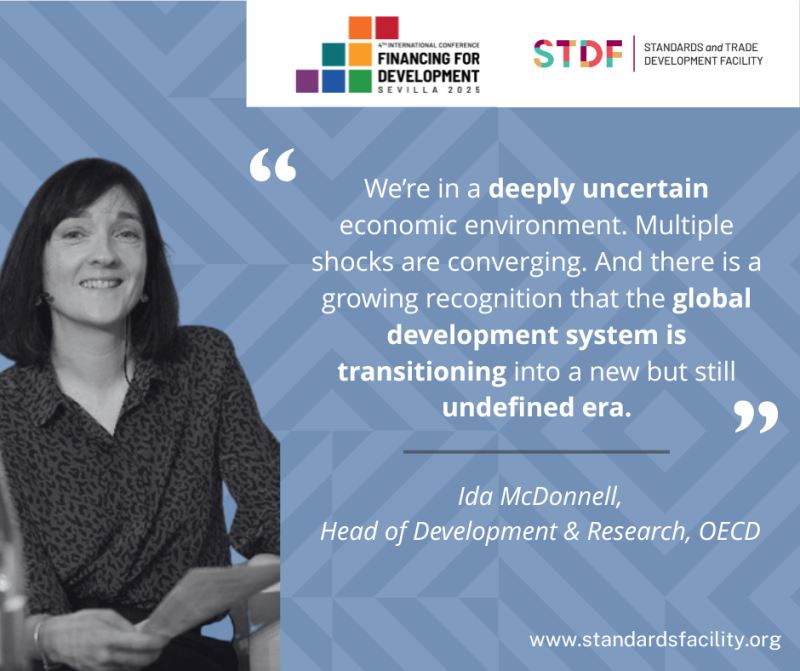
OECD’s Ida McDonnell emphasized the importance of breaking down sectoral silos and embedding scalability and sustainability into project design from the outset. This includes integrating SPS priorities into national investment plans, ensuring cross-ministerial coordination and implementing the frameworks needed to drive long-term, systemic impact. Despite the projected decline in ODA, she noted encouraging demand for Aid for Trade, which reached 50 billion dollars in 2023, largely targeting infrastructure, policy environments and productive capacities.
Looking Ahead
The STDF’s FFD4 side event made clear that while the global development finance landscape is evolving, there is growing momentum and opportunity to rethink how resources are mobilized to support safe trade. With its new 2025–2030 Strategy placing strong emphasis on innovation and scaling, STDF is well positioned to continue driving forward critical conversations, encourage new solutions and help promote successful approaches, inspiring alternative financing pathways for SPS systems.
Learn more about the event and watch the recording here.